Washington - The
US President Donald Trump administration is reportedly considering an executive order that would
request State Department review designating Muslim
Brotherhood group as a Foreign Terrorist Organization.
According
to US media reports, the Trump administration is currently weighing an
executive order on this matter. Alternatively, the White House could decide to
simply throw its weight behind a legislative effort spearheaded by Republican
Senator Ted Cruz (Texas) that calls on the State Department to determine
whether the Muslim Brotherhood is a foreign terrorist organization.
However,
the proposal of designating ‘Muslim Brotherhood’ as a foreign terrorist
organization has opened up heated debates among experts. Some argued in favour
of the designation proposal, and other weighed in against it.
For critics
of the designation, such a move might amount to a powerful policy
win for America’s anti-Muslims movement, whose leaders have worked tirelessly to
smear American Muslim civil rights organizations, in particular the Islamic
Society of North America (ISNA), the Council on American Islamic
Relations (CAIR) and the North American Islamic Trust (NAIT), by
calling them “fronts” for the Brotherhood.
As
J.M. Berger, a counter-terrorism analyst at George Washington University’s
Program on Extremism recently put it, “Let me be extremely clear. This
initiative is concerned with controlling American Muslims, not with any issue
pertaining to the Muslim Brotherhood in any practical or realistic sense.”
Last
month, an internal CIA memo argued that designating the Brotherhood would
offend the many Muslims who are members of the organization, receive social
services from its affiliates, or respect the group as a part of their
community. “Moreover, a US designation would probably weaken MB leaders’
arguments against violence and provide ISIS and al-Qa’ida additional grist for
propaganda to win followers and support, particularly for attacks against US
interests,” the memo, which leaked to press, stated.
That
argument was echoed by Jillian Schwedler, a professor at Hunter College, who
wrote last week that, “Designating the Brotherhood could hinder crucial U.S.
partnerships as the designation would likely interfere with the ability of the
U.S. government to work effectively with governments in which the Brotherhood
plays a role. This could include Turkey's President Receb T. Erdogan’s government in Turkey and
parliaments in Morocco, Tunisia, Jordan, and Yemen, where the
Brotherhood-affiliated party is backing the internationally-recognized
government alongside the United States and Saudi Arabia against the Houthi
rebels.”
This argument often tends to repeat the old
claim that "... the Muslim Brotherhood in Egypt officially renounced
violence in the 1970s and sought to promote its ideas through social and
political activities".
Ultimately
experts warn of the possible ramifications of that designation—being politically-motivated—as
it will definitely ruin coexistence and assimilation, raise the wall of racism
based on religion and cultural identity, and revive wild nationalist extremist
movements in America.
Yet,
for supporters of the designation proposal, the group, they argue, is a
violent, destabilizing terrorist force akin to Islamic State (ISIS) abroad and
is bent on subverting American society at home.
Frank
Gaffney Jr., founder of the Center for Security Policy, recently told The New
York Times, “The goals of the Muslim Brotherhood are exactly the same as the
Islamic State, exactly the same as the Taliban, exactly the same as you know, Al-Qaida(AQ), Boko Haram, Al Nusra Front, on and on, Al-Shabab (working mainly in Somalia and Eastern Africa).”
US
Secretary of State Rex Tillerson placed the Brotherhood in the same category as
al-Qaida during his confirmation hearings, deeming it an agent of radical
Islam.
However, in his book, “Arab Fall”, Eric Trager argues that the case for giving it the terrorist
designation is not clear-cut. He drew the following conclusion that might serve
as a warning for the Trump administration’s intended measures against the group.
“If the Trump administration tries and fails
to designate the Brotherhood as a foreign terrorist organization, it could backfire:
Brotherhood organizations would likely hail this as a victory and use a failed
designation as evidence to claim—falsely—that they are nonviolent. And given
the polarized political climate in Washington, a failed Brotherhood designation
might ultimately afford the Brotherhood a more generous hearing in certain
political and policy circles.”

 Egypt’s Dar al-Ifta weighs in on ‘Divorce Spree’ (Part 2)
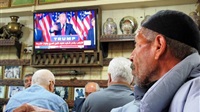 Report: White House may name Muslim Brotherhood & Iran’s Revolutionary Guard terror groups
 Egypt denies reconciliation with Muslim Brotherhood, escalates its campaign against terrorist groups
 Muslim Brotherhood tried to set up their own statistics, says Egypt’s CAPMAS Chairperson
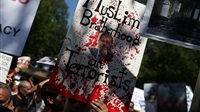 Muslim Brotherhood lost 145 million Saudi riyals after incident of fraud, sources
 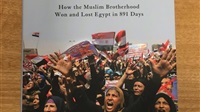 What did Egypt's Muslim brothers do when in power? This book answers
 Egypt’s Dar al-Ifta weighs in on ‘Divorce Spree’ (Part 2)
 Meet the first female governor in Egypt
 Breaking: 'Blind Sheikh' Omar Abdel Rahman died in US prison- Reports & Family statement
 Islam and Free Speech: Hypocrites’ War over Prophet Muhammad