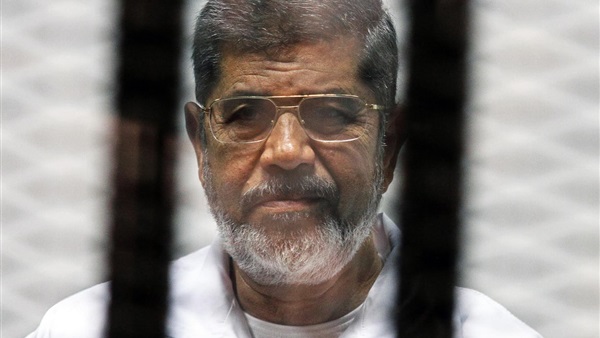
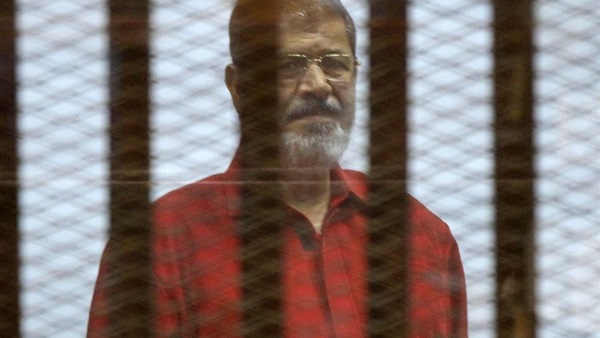
Cairo – August 8 is the birthdate of Egypt's ousted Islamist president Mohamed Morsi. He has just turned 66 this year, which he marked and contemplated, inside prison.
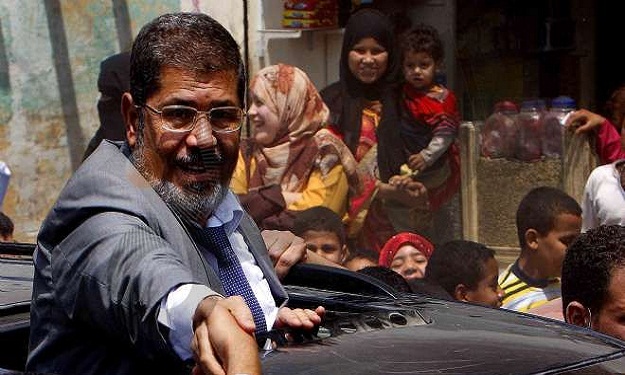
He took the helm of power in Egypt on June 30, 2012 to be the first president of Egypt borne out of January 25, 2011 Revolution. However, mass protests erupted across Egypt, which saw protesters calling for the Morsi’s step-down. Morsi has spent the past 60 months in jail, on trial in an ever-increasing number of cases ranging from espionage to incitement and murder during his disastrous one-year rule as the fifth President of Egypt.
In response to the events, Morsi was given a 48-hour ultimatum to meet their demands and to resolve political differences, or else Egypt’s military would intervene to diffuse the stalemate. Failed to comply, Morsi was overthrown on 30 June 2013.
Since his overthrow, Egyptian prosecutors have charged Morsi with various crimes and sought the death penalty. His death sentence was overturned, so he will receive a retrial. However, Morsi is still currently imprisoned.
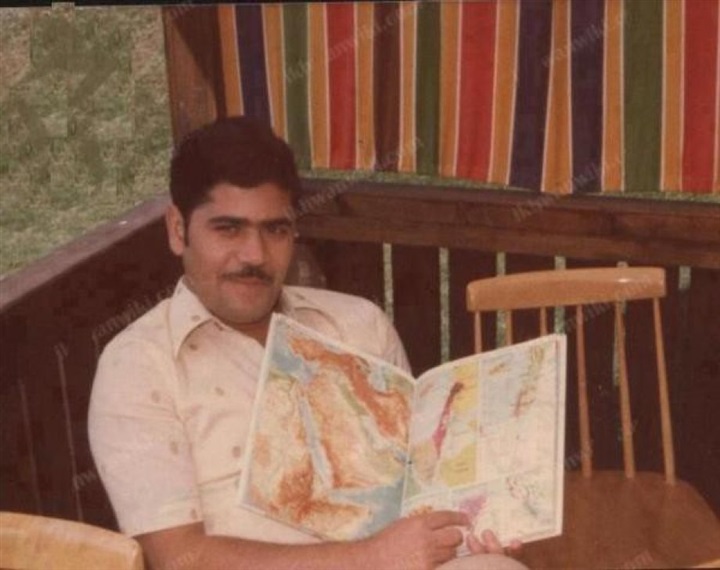
Mohamed Morsi was born in the Sharqia Governorate, in northern Egypt, of modest provincial origin, in the village of El Adwah on August 8, 1951. His father was a farmer and his mother a housewife. He is the eldest of five brothers. He earned a BA in engineering with high honors in 1975. He earned a government scholarship that enabled him to study in the United States. He received a PhD in materials science from the University of Southern California in 1982.
Academic and Political career
While living in the United States, Morsi became an Assistant Professor at the California State University from 1982 to 1985 and worked with NASA in the early 1980s, helping to develop Space Shuttle engines.
In 1985, Morsi quit his job at CSUN and returned to Egypt, becoming a professor at Zagazig University, where he was appointed head of the engineering department. Morsi was a lecturer at Zagazig University's engineering department until 2010.
On the political side, Morsi adopted the ideas of Muslim Brotherhood in 1977, as he officially joined the group in 1979. He was elected as a member of Egypt’s parliament in 2000 and served as a spokesperson of Muslim Brotherhood’s parliamentarians.
He was a member of the Guidance Office of the Muslim Brotherhood until the founding of the Freedom and Justice Party in 2011, at which point he was elected by the MB's Guidance Office to be the first president of the new party.
The nadir of his career
He was chosen to chair Freedom and Justice Party, political
arm of Muslim Brotherhood in 2011 and played a role in the so-called
Democratic Coalition for Egypt which included 11 political parties.
Muslim
Brotherhood nominated Morsi in the first presidential elections held after January
25, 2011 Revolution in 2012. Morsi won the elections by a narrow margin after a run-off against Mubarak-era
Prime Minister Ahmed Shafiq.
Morsi’s electoral victory was a turning point in the history
of Muslim Brotherhood, as it was the first time for the group to seize the
power since its establishment in 1928.
Morsi was part of political age among the Muslim Brotherhood generation that had cobbled together a significant popular base on college campuses in the 1970s - a widespread student movement. The group formally had adopted a pragmatist approach to democracy since 1995, seeking out backdoor channels of power. By exploiting gaps in government services, the Brotherhood was able to extend its reach; and quickly its influence had leaked into professional work syndicates and circles of social welfare work.
Later, Morsi was part of the cohort that wedged a space for the Muslim Brotherhood under Mubarak's government, earning himself a seat in Parliament in 2000. Once a secretive organization, knitted out of the strong bonds of mentor-disciple relationships, the Brotherhood was contorting and morphing into a multivocal political platform with an emphasis on ‘social activism for political ends’.
Instead of maintaining a working relationship with other revolutionary factions, Morsi quickly alienated them, and acted only in the interest of the Brotherhood’s parochial interests. “The Brotherhood had a degree of political stupidity,” says Abdel Moneim Aboul Fotouh, a former Brotherhood big beast who ran against Morsi in 2011, and was once considered the election’s front-runner.
Disasterous one-year rule
Morsi’s era witnessed countless clashes between presidency
and other institutions of the Egyptian state, including the military, judicial
and intelligence authorities. He took a number of controversial decisions,
including the exclusion of former Public Prosecutor Abdel-Maguid Mahmoud, in a
clear violation to the judicial norms.
Morsi won the election, but only just. And many who got him over the line in the run-off had voted not from conviction – but because they 'saw him as marginally more preferable to his opponent in the final round: Mubarak’s last prime minister. But rather than keeping everyone onside, Morsi was seen as increasingly divisive, open only to Islamist ideas, and loyal only to the Brotherhood's parochial ends.
In October, at celebrations to mark one of the Egyptian army’s most historic victories, Morsi invited a man convicted of assassinating late President Anwar Sadat. It was a highly provocative gesture that did nothing to assuage fears that Morsi’s election marked the gateway to a more extremist Egypt.
The more relevant lessons from Morsi's debacle
But the event that may have sealed his fate came a month later, in November 2012. Seeking to fast-track a controversial, Islamist-slanted constitution, Morsi awarded himself total executive control, allowing himself to bypass judicial procedures to ensure the text was put to a public vote without further debate. The decision led to deadly street fights between Brotherhood supporters and leftist and liberals outside the presidential palace. Within 10 days, he revoked his decision. But for those who had been on the fence, it was a point of no return.
In reality, Morsi's decision smacked of dictatorship, and meant that Egypt’s divisions would only deepen as Morsi’s tenure continued. His opponents felt there was little point engaging with him. And Morsi saw little point in trying – the fact that the Brotherhood had been on the winning side in every post-revolutionary election gave them an erroneous sense of their own invincibility. But by late May, they should have been worried. By this point a significant proportion of the population had started to mobilise against them.
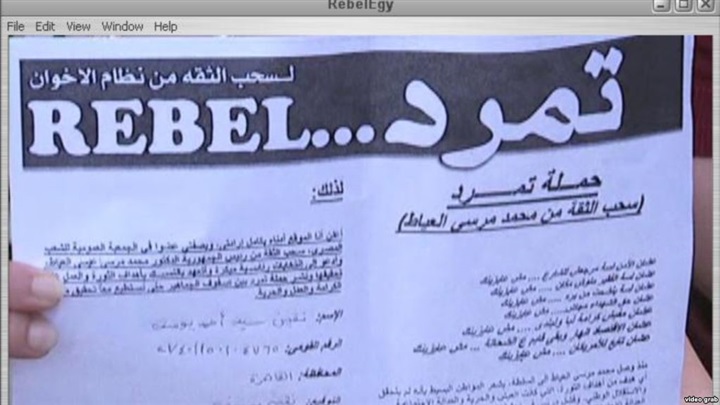
A new campaign group, Tamarod, caught the imagination, and encouraged millions of Egyptians, many of whom had voted for Morsi, to sign a petition calling for early elections.
The end
Egypt’s then-Defense Minister Abdel-Fattah Al-Sisi (now President) decided
to respond to the people’s calls by issuing an ultimatum for Morsi to leave office. As the
former president refused to respond to the people’s demands and calls for early
presidential elections, days later, he was overthrown on July 3, 2013, and placed under house arrest incommunicado.
In September 2013, Egypt’s Public Prosecutor referred Morsi to the criminal court; and Morsi now sits in a jail cell, facing a death sentence and charges that range from leaking intelligence information to collaborating with foreign forces to free Islamists from jail in 2011.

 Egyptian raised slogans demanding Morsi to leave office
 US Ambassador Voices Concerns on IAEA inspectors not gaining access to Iran bases


 Global Markets names Tarek Amer Central Bank Governor of the Year
 IS fighter hilariously mocked by Spanish social media users
 Egyptians continue to excel in World Taekwondo Championship
 Italian ambassador’s return to Cairo: New success of Egypt’s diplomacy
 Insider Perspective: Rabaa dispersal, why Muslim Brotherhood chose this venue for sit-in?
 Farewell to my teacher and mentor Refaat El-Said