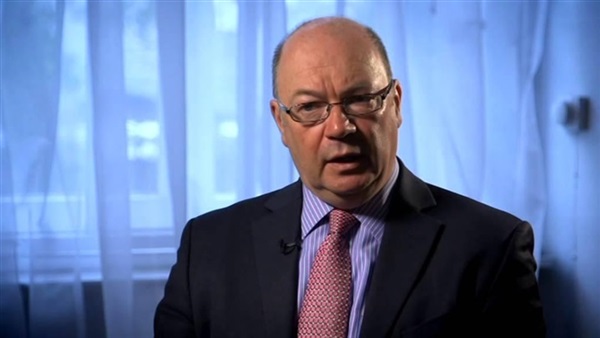
During his visit to Cairo last week, British Minister of
State for the Middle East Affairs Alistair Burt said that Muslim
Brotherhood should abandon its ambiguous tactics it employs to avoid too much
scrutiny of its activities. The statement reflects notable change in the
British assessment of the group which was increasingly defended by the latest
government of former Prime Minister David Cameroon.
Cameroon’s government issued a report to assess the
activities of Muslim Brotherhood in Britain, while the results of
investigations conducted by the British government did not meet the aspirations
of the people who realize the serious threat posed by the group. The report
claimed that the available evidences did not meet the demands to ban the group’s
activities.
Sectarian tensions
However, the statement of the British official comes to leave
the impression of a potential change in the British policies towards the group
especially after the recent attacks that targeted London and other European
cities.
Egyptian Columnist Abdel-Latif El-Menawy said that the main
reason behind the change of British tone towards the group is their attempt to
fuel sectarian tensions in Egypt, clarifying that the group’s leaders in London
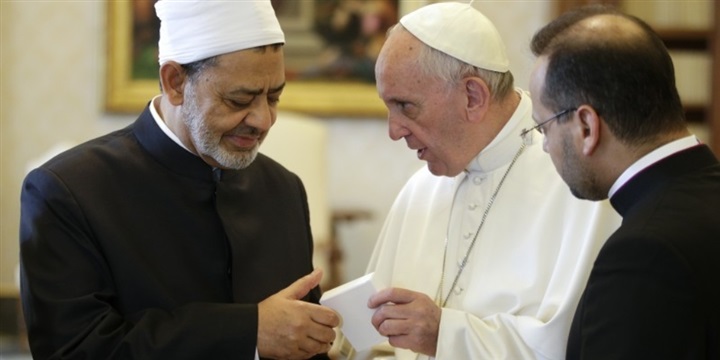
were keen to described security personnel assigned to secure Vatican’s Pope
Francis during his visit to Egypt in April as Christian militias.
Extremist clerics
Also the latest terrorist attacks that hit London was one of
the major reasons that pushed British Prime Minister Theresa May to take
different approach towards Muslim Brotherhood. Many experts believe that the
group’s clerics played a major role to recruit Muslim youth living in Britain
for the extremist groups whether inside the country or in other places such as
those Britons who joined ISIS in both Syria and Iraq.
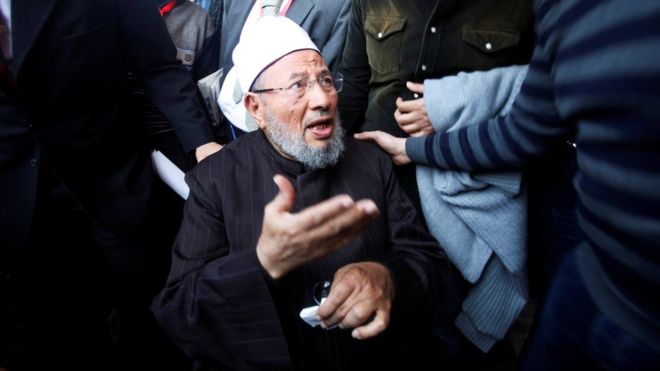
Egyptian expert Saeed Al-Lawendi underlined the wave of
criticism that targeted Muslim Brotherhood’s clerics, including Yusuf
Al-Qaradawi, in the aftermath of the latest attacks in London. He added that
many reports revealed that the terrorist who committed the attack was praying
in a mosque related to Muslim Brotherhood and the mosque’s preacher was a
student of Al-Qaradawi.
Blair's statements
On the other hand, the change in British position towards
Muslim Brotherhood may come in the framework of the internal political
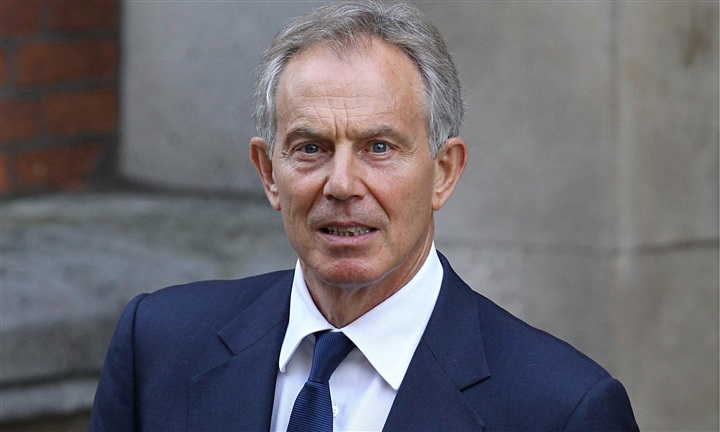
conflict. Ex-Prime Minister Toni Blair warned that a new wave of religious
intolerance is originating in the West, where groups like the Muslim
Brotherhood operate freely, proving a threat back in the Arab world.
Professor of Political Science
Jihad Ouda underlined Blair’s ambitions to return to the political arena after years
of retirement, saying that his statement against Muslim Brotherhood could
increase his popularity among the British people. Ouda said that Burt’s
statement comes to address the British people.
Unified Arab position
In the same context, the current position
adopted by the Arab Countries combating terrorism against Muslim Brotherhood and
Qatar pushed the international powers to take steps to change their position
from the group and its supporters, including Qatar.
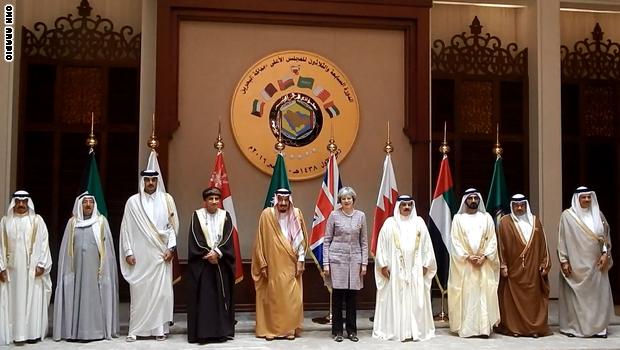
Al-Lawendi highlighted May’s
position to strengthen relation with the Gulf States, as she was keen to hold
two Gulf tours since the beginning of her term as a prime minister, the first
was in Bahrain to open the British military base in Bahrain and to attend the
Summit of Gulf Cooperation Council in Manama last December, and the second was
to visit Saudi Arabia in April.
He stressed that the British
government chose to sell the Muslim Brotherhood to restore its alliance with
the Gulf States, saying that they also to take neutral position from the
current diplomatic crisis with Qatar not to lose its relations with the major
Gulf States.

 No US troops injured in Kabul blast - US Military
 Revolution Brigade admits 'Al-Banna is our authority'
  No US troops injured in Kabul blast - US Military
 Bahrain, Egypt bilateral ties reviewed
 Rabaa Tragedy: Great shame in Muslim Brotherhood’s history
 Italian ambassador’s return to Cairo: New success of Egypt’s diplomacy
 Farewell to my teacher and mentor Refaat El-Said