Since the anti-terror measures the Saudi government enacted earlier this
year, the Saudi media has been launching a campaign to demonize Islamist
activism.
This underscores the ruling family's unease over its inability to curb
the influence of religious activists, particularly pro-Muslim Brotherhood and
former Al-Sahwah (awakening) movement clerics.
Earlier in March, Saudi Arabia designated the Muslim Brotherhood as a
terrorist organization, along with several other Middle East-based Islamist
groups, including the kingdom’s branch of the Shiite movement Hezbollah, the
Islamic State in Iraq and Syria (ISIS), the Al-Qaeda-linked Al-Nusra Front and
Al-Houthi group.
This designation represented a major escalation by Saudi Arabia against
the Muslim Brotherhood. It also marked a significant departure from its past
official stance, as Saudi Arabia hasn’t always had a problem with the Muslim
Brotherhood.
In the 1950s, Saudi Arabia gave shelter to thousands of Brotherhood
activists facing harsh repression in Egypt, Syria, and elsewhere. The
Brotherhood soon became entrenched both in Saudi society and in the Saudi
state, taking a leading role in key governmental ministries. Later, the Muslim
Brotherhood’s influence led to the politicization of Islam in the kingdom.
But the royal family is now convinced that the Muslim Brotherhood and
all similar groups represent an existential threat for Gulf monarchies.
Saudi media has recently accused several political and militant Islamist
groups of fomenting the Arab Spring and causing chaos, offering recent examples
of the regime's longstanding efforts to discredit these groups.
Jasir al-Jasir in the Saudi London-based daily Al-Hayat warned that
Brotherhood members in Saudi Arabia "dominate the education system,
Islamic preaching, and relief organizations" and praised the designation
of the Muslim Brotherhood as a terrorist organization. He deemed the
designation as "the beginning of the process [against the Brotherhood] and
the first step in the process of cleansing" Saudi society of mistaken,
harmful notions of Islam.
Columnist Mashari al-Dhaydi explained in the Saudi London-based daily
Al-Sharq al-Awsat that "ISIS is the first and bitter enemy is Saudi
Arabia, for various reasons, including Saudi Arabia's religious and political
weight within the Arab and Islamic world." Al-Dhaydi concluded that
"Saudi Arabia is ISIS's ultimate target. Fighting against ISIS is a
mission linked to the essence of Saudi Arabia's existence."
Columnist Abdallah Bin-Bajjad al-Utaybi wrote in Al-Sharq al-Awsat
decrying the revolts in the Arab world as "a fundamentalist spring, par
excellence, for the political Islam movements and the violent religious
groups." Al-Utaybi praised the Saudi official stance in "rejecting
terrorism and terrorist groups, including Sunni and Shiite organizations."
The Muslim Brotherhood appears to be the campaign's prime target
probably because pro-Brotherhood clerics enjoy an extensive presence in both
traditional and social media and the Saudi regime sees them as more popular
than Saudi establishment clerics.
Members of the Saudi ruling family - in a departure from their standard
practice of relying on journalists to publicly convey their views - have
themselves commented vehemently on Saudi pro-Brotherhood clerics.
For example, Saudi Prince Mamduh Bin-Abdulaziz al-Sa'ud in June 2013
purportedly penned a column in which he decried "preachers at the gate of
hell" and accused former Al-Sahwah movement members Salman al-Awdah,
Nasser al-Umar, and Awad al-Qarnib and pro-Brotherhood preacher Muhammad
al-Arifi of "planning to control the country and people."
Both Al-Awdah and Al-Arifi are very popular and have millions of
followers on Twitter.
In June 2014, the Saudi authorities withdrew Al-Awdah's books from
bookstores, along with those of Kuwaiti Brotherhood activist Tariq al-Suwaydan.
Saudi media has targeted the Egyptian Brotherhood for years and have
tried to discredit a number of independent Saudi clerics labelled as
pro-Brotherhood.
Since the advent of the Arab Spring, the Saudi London-based press has
carried opinion articles depicting Muslim Brotherhood members as
"traitors" and "terrorists" and describing the
Brotherhood's alleged "secret plans for the Gulf" and their
"extended overlap with the Taliban, Al-Qaeda, and ISIS."
The campaign against the clerics parallels Saudi domestic efforts to
control mosque preachers and sermon content. It also coincides with the
regime's anti-Brotherhood efforts abroad, including Riyadh's political and
financial support to the anti-Brotherhood leadership in Egypt and the open
conflict with Qatar for Doha's perceived collusion with the Muslim Brotherhood.

 U.S must pressure Qatar to evict extremists: Islamist dissenter

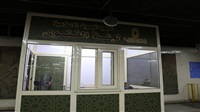 Al-Azhar’s Fatwa Kiosk: An initiative gone wrong
 ElBaradei: The Icon of treason
 U.S must pressure Qatar to evict extremists: Islamist dissenter
 Qatar: Sponsor of Transnational Terrorism